
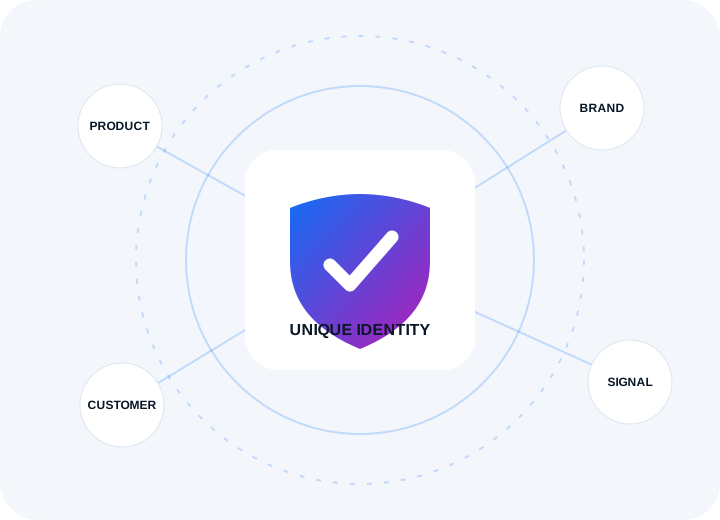
One verification event rarely tells the full story. Trust intelligence emerges when a brand can compare configured events across time, place, product and expected channel behaviour.
Signals—not automatic accusations
A repeated verification may be completely legitimate: a customer could check the same product twice or share it with another person. The same identifier appearing rapidly across distant locations may deserve more attention. Neither event alone proves counterfeiting.
A responsible platform surfaces signals for review rather than presenting every anomaly as a final conclusion.
Patterns that may deserve attention
- An identity that does not exist in the issued code set
- Unexpectedly high repeat activity for one identifier
- Activity appearing in markets where the product was not intended to be sold
- A sudden cluster of requests linked to a product or batch
- Timing or geographic combinations inconsistent with normal product movement
Turn signals into a process
Useful detection requires an operating model. The brand should define who reviews alerts, what supporting information is checked and when distributors, marketplaces or enforcement partners are contacted.
Probeos Pure is designed to support that decision process with product-level identity and privacy-conscious event intelligence. Technology provides the evidence; the brand applies commercial and investigative context.
Trust infrastructure for physical products.